


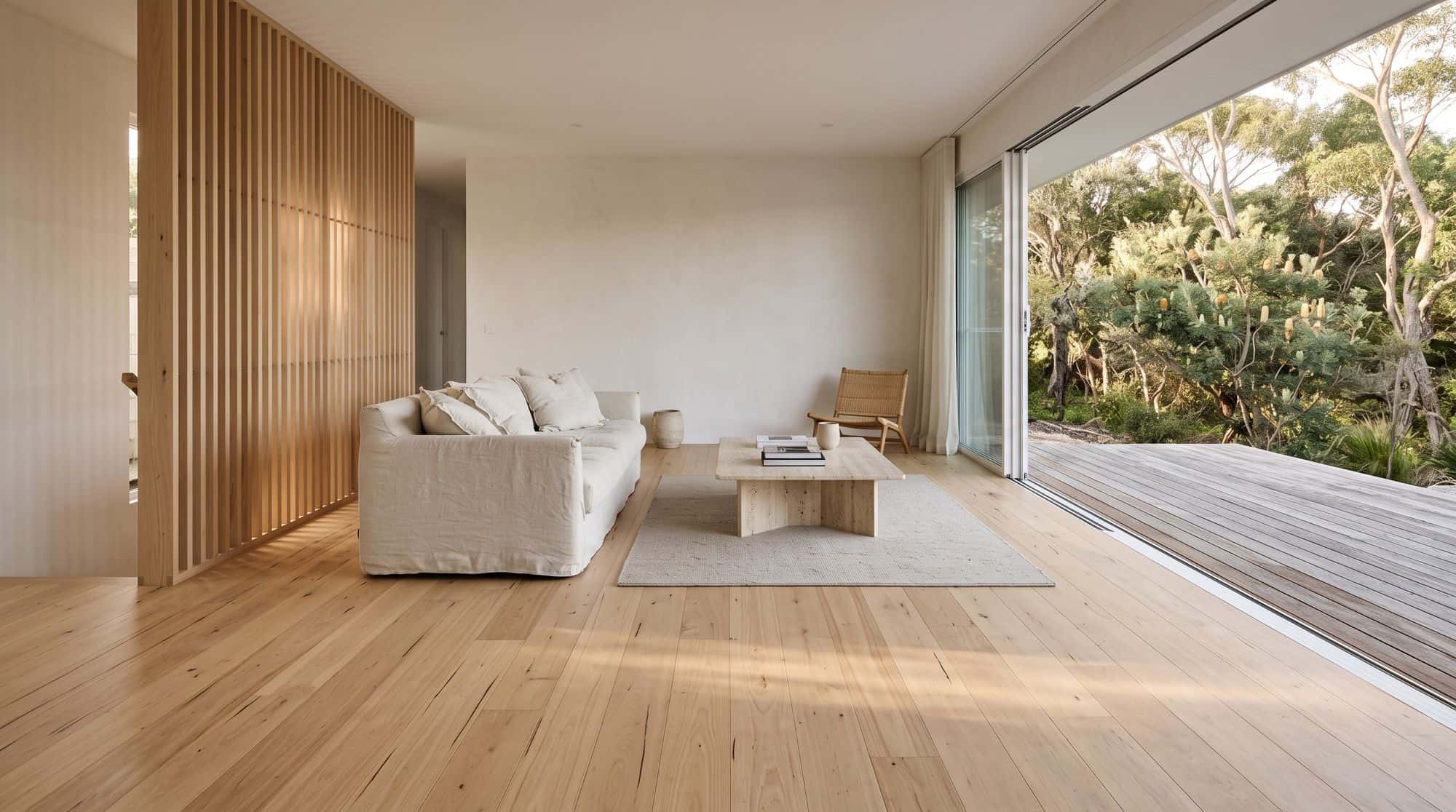

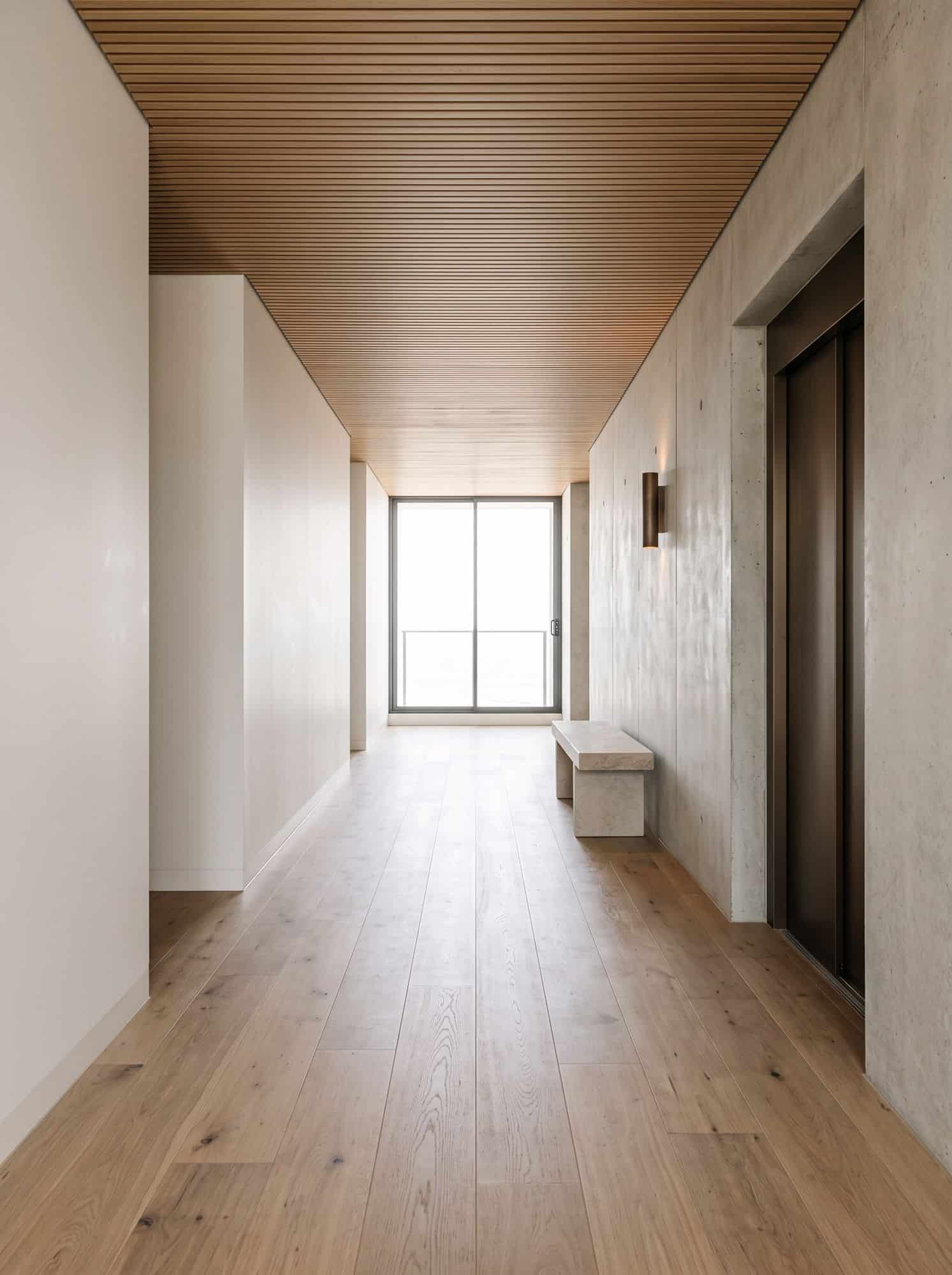
You’ve scrolled past it a hundred times on Instagram and Pinterest. Microcement flooring – seamless, minimalist, effortlessly chic. It looks like something from a luxury hotel or a designer showroom. And that’s exactly why you’re thinking about it.
But before you commit, there’s a conversation to have. Microcement is beautiful. That’s not in question. What’s in question is whether it’s the right choice for your home, your family, and your lifestyle.
What Microcement Actually Is
Microcement isn’t a traditional flooring material. It’s a thin cementitious coating – usually 2 to 3 millimetres thick – applied directly over your existing subfloor. Think of it as a premium skim coat that creates a seamless, joint-free surface.
That seamless quality is exactly why it looks so good. No grout lines, no gaps, no transitions. Just one continuous, flowing surface. It’s a genuine design advantage. The problem is that this advantage comes with some trade-offs.
The Real Problems with Microcement
Subfloor Preparation: Unforgiving and Critical
Microcement is ruthlessly honest about what’s underneath it. Every crack, every movement, every imperfection in your subfloor will telegraph through and become visible on the surface.
In Queensland, this is a bigger issue than most people realise. Our climate creates slab movement. Concrete slabs expand and contract with temperature and humidity changes. In a Gold Coast home where your air conditioning is working hard alongside intense summer heat, that movement is constant. If your subfloor has any structural cracks or if the slab is moving, a microcement finish will show it. And once it’s visible, you can’t hide it without removing the entire installation.
Proper subfloor prep for microcement is meticulous and expensive. Any shortcuts here will come back to haunt you.
Maintenance: Ongoing Sealing and Staining
Unsealed microcement stains easily. Coffee, wine, oil, dirt – all of it marks the surface. So you need to seal it.
Here’s the catch: that seal isn’t permanent. You’ll need to reseal every 1 to 3 years depending on foot traffic and use. In a busy family home with kids and pets, you’re looking at annual sealing. That’s a recurring cost and a recurring appointment on your calendar.
Even sealed, microcement is more vulnerable to staining than timber or hybrid flooring. You need to be vigilant about spills and cleanup. For some households, that’s fine. For others, it’s a constant source of stress.
Scratches and Chips: Permanent Damage
Microcement chips and scratches. It’s softer than you might expect. High-traffic areas, pet claws, dropped objects – all of these will mark the surface over time.
Here’s what makes this particularly painful: you can’t replace a single plank or tile. When microcement is damaged, you can’t just swap out the damaged section. The entire affected area needs to be ground down and recoated. That’s not a quick fix. That’s a project. That’s expense.
With a hybrid floor or engineered timber, you replace the damaged board. Problem solved. With microcement, you’re looking at costly remedial work.
Temperature: Cold Underfoot, No Insulation
Microcement has zero thermal mass. Applied directly to a concrete subfloor, it conducts cold. In an air-conditioned Gold Coast home, walking across microcement in summer can feel notably cold underfoot.
You can’t add underlay to microcement like you can with traditional flooring. There’s no way to insulate the surface. If thermal comfort matters to you – and for most people it does – this is a real drawback.
Cost: Premium Price for a Trend
Installed microcement typically costs between $150 and $300 per square metre. For a 60 square metre room, you’re looking at $9,000 to $18,000. That’s before maintenance, before sealing, before future repairs.
For that same budget, you could install premium hybrid flooring or high-quality engineered timber. You’d get a product that’s easier to maintain, more durable, better for resale, and more comfortable underfoot. That’s a significant trade-off to consider.
DIY Risk: Skill-Dependent Installation
Microcement installation is one of the most technique-dependent processes in the flooring industry. It requires expertise in surface prep, coating application, curing, and finishing.
A bad application can’t be fixed with sanding or repair. You’re looking at full removal and reinstallation. That’s catastrophic for a DIY project or if you choose an inexperienced installer. This is not a place to save money on labour.
Resale and Buyer Perception
Timber flooring adds value. Almost universally. It’s understood. It’s warm. People want it.
Hybrid flooring is increasingly recognised as a smart, practical choice. Buyers understand the value proposition.
Microcement? It polarises. Some buyers love it. Others are put off by the maintenance requirements, the perception of trendiness, or the impracticality for family living. It doesn’t command the same resale confidence as traditional flooring options.
Where Microcement Actually Makes Sense
Let’s be honest about where microcement does work well.
Bathrooms are an excellent application. The moisture resistance, the seamless surface, the easy cleaning – these are all advantages in a bathroom environment. Microcement can be a genuinely smart choice here.
Feature walls or accent spaces in open-plan living areas can work too. A single feature floor in your entryway or a hallway can deliver that designer look without the commitment of doing your entire home.
Commercial hospitality spaces – cafes, restaurants, small hotels – where the aesthetic trumps practicality and where professional maintenance is built into operations. This is where microcement truly shines.
For general residential living areas in a family home? The equation tilts heavily the other way.
What Delivers the Same Look Without the Downsides
You want that seamless, modern aesthetic. That minimalist vibe. That Instagram-worthy finish. We get it. The good news is you don’t need microcement to have it.
Large Format Hybrid Planks
Modern hybrid flooring comes in large format planks – 1,200mm to 1,800mm long, 200mm to 300mm wide. In concrete-look or stone-look finishes, these create that seamless, expansive visual that microcement offers.
They’re waterproof, they float-install without adhesive, and if one plank is damaged, you replace that single plank. They’re easier to maintain than microcement, more comfortable underfoot, and they hold value at resale.
At the Evolved Floors Gold Coast showroom, you can see how large-format hybrid looks at scale. It’s genuinely comparable to the microcement aesthetic, without the headaches.
Herringbone Hybrid in Warm Tones
If you love the textural interest that appeals to microcement fans, herringbone hybrid delivers it. The pattern adds visual richness, the wide planks feel modern and considered, and the warm tones are deeply appealing.
Maintenance is straightforward. Durability is excellent. Resale value is strong. And you get that curated, designed aesthetic without the maintenance nightmare.
Engineered Timber in Wide Boards
Nothing beats genuine timber for warmth and authenticity. Wide-plank engineered timber gives you the solid timber look and feel with the stability and durability you need for Queensland’s climate.
It’s warm underfoot. It improves with age. It’s easier to repair than microcement – a professional sanding or spot repair can bring it back to life. And it has genuine resale value.
The Question to Ask Yourself
So here’s the decision framework: Is microcement right for your home?
If you want a showroom or commercial aesthetic and you’re genuinely prepared for the ongoing maintenance commitment, the sealing requirements, and the cost of future repairs – then microcement might be right for you.
If you want a beautiful floor that lives well, that handles a family, that stands up to pets and Gold Coast humidity, that doesn’t require annual maintenance visits, and that adds value when you eventually sell – then there are better options.
The best flooring is the one you’ll actually enjoy living with. Not the one that photographs best on Instagram.
The Informed Decision
Microcement is a legitimate design choice. It has genuine advantages in specific applications. But it’s not the universal solution it’s often portrayed to be, especially not for Australian family homes in a subtropical climate.
The flooring decision that’s right for you depends on your lifestyle, your maintenance tolerance, your climate, your family situation, and your long-term vision for your home.
You deserve to make that decision with full information.
Come into the Evolved Floors Gold Coast showroom or Byron Bay studio and see all the options at real scale. See how large-format hybrid actually looks. Feel the warmth of engineered timber underfoot. Understand what you’re choosing, and why.
We’ll never push you toward one option. We’ll show you what your choices actually look and feel like in person. Because the best flooring decision is an informed one.
Ready to Explore Your Options?
Visit our Gold Coast showroom at 3/99 Ashmore Road, Bundall QLD 4217, or our Byron Bay studio. Our trade counter is at Unit 4, 6-8 Enterprise Street, Molendinar. See hybrid, timber, and engineered options at full scale. Get expert advice with no pressure.
Phone: 1300 45 11 32
Website: https://evolvedfloors.com.au